

There’s a mistake I see many people make when they decide to invest in rental property.
They rush into construction.
The excitement is understandable.
You have land, a vision, maybe even some savings ready to go.
But if I were starting today, I wouldn’t begin with drawings or materials.
I would begin with one simple question:
Who is this property for?
Because the success of a rental project doesn’t start with concrete or blocks.
It starts with the tenant.
Start With the Tenant, Not the Building
Before thinking about layouts or finishes, it helps to get clear on the kind of person you’re building for.
Are you targeting:
- Someone looking for a simple, affordable unit?
- A young professional who values comfort and convenience?
- A family that needs space and functionality?
Once that picture becomes clear, a lot of decisions start to align naturally.
You understand what rent is realistic.
You get a sense of how much space is actually needed.
You begin to see what level of finishing makes financial sense.
Without this clarity, it’s easy to overbuild.
Or worse, mismatch your investment with what the market is willing to pay.
Think Beyond Today When Laying the Foundation
One of the most overlooked decisions in rental construction is the foundation.
It’s tempting to build only for what you need now. But rental projects evolve.
You might start with a single floor…
and a few years later, want to go two or three floors up.
If the foundation wasn’t designed with that future in mind, you’re left with limited options.
Either stop growing or spend heavily correcting something that should have been planned early.
A well-prepared foundation gives you flexibility.
It gives your project room to grow.
And in real estate, flexibility is valuable.
Build in Phases, Not Pressure
Another trap many first-time investors fall into is trying to complete everything at once.
If your budget is limited, there’s a smarter approach.
Build in phases.
Start with a section that can function independently, like ground floor units, for example.
Finish them properly, get tenants in, and let the property begin generating income.
That income can then support the next phase.
This approach reduces financial pressure and allows the project to grow sustainably over time.
Choose a System You Understand
Construction technologies can feel overwhelming, especially with so many options available today.
But instead of chasing what’s “popular,” it helps to simplify your thinking.
Focus on how a system behaves in real life:
- How labour-intensive is it?
- How long does it take on site?
- What kind of finishing does it require afterward?
Some systems arrive partially complete, reducing on-site work.
Others require more labour and adjustments.
These differences may seem small at first, but they quietly shape your overall cost and timeline.
Let Rent Guide Your Finishes
Finishes are where many rental projects lose direction.
You want your units to feel nice, and that’s valid.
But it’s easy to go slightly above what your target tenant is willing to pay for.
And that’s where problems begin.
If your costs rise but your rent doesn’t match, your returns suffer.
The goal is not to build the nicest unit possible.
The goal is to build a unit that makes sense for the rent it will earn.
Be Strategic With Structure and Space
If you plan to build upwards, structural choices become even more important.
Slabs, for example, carry weight, connect spaces, and take up a significant portion of your budget.
Choosing efficient systems, like beam and block, can help manage material usage without compromising strength.
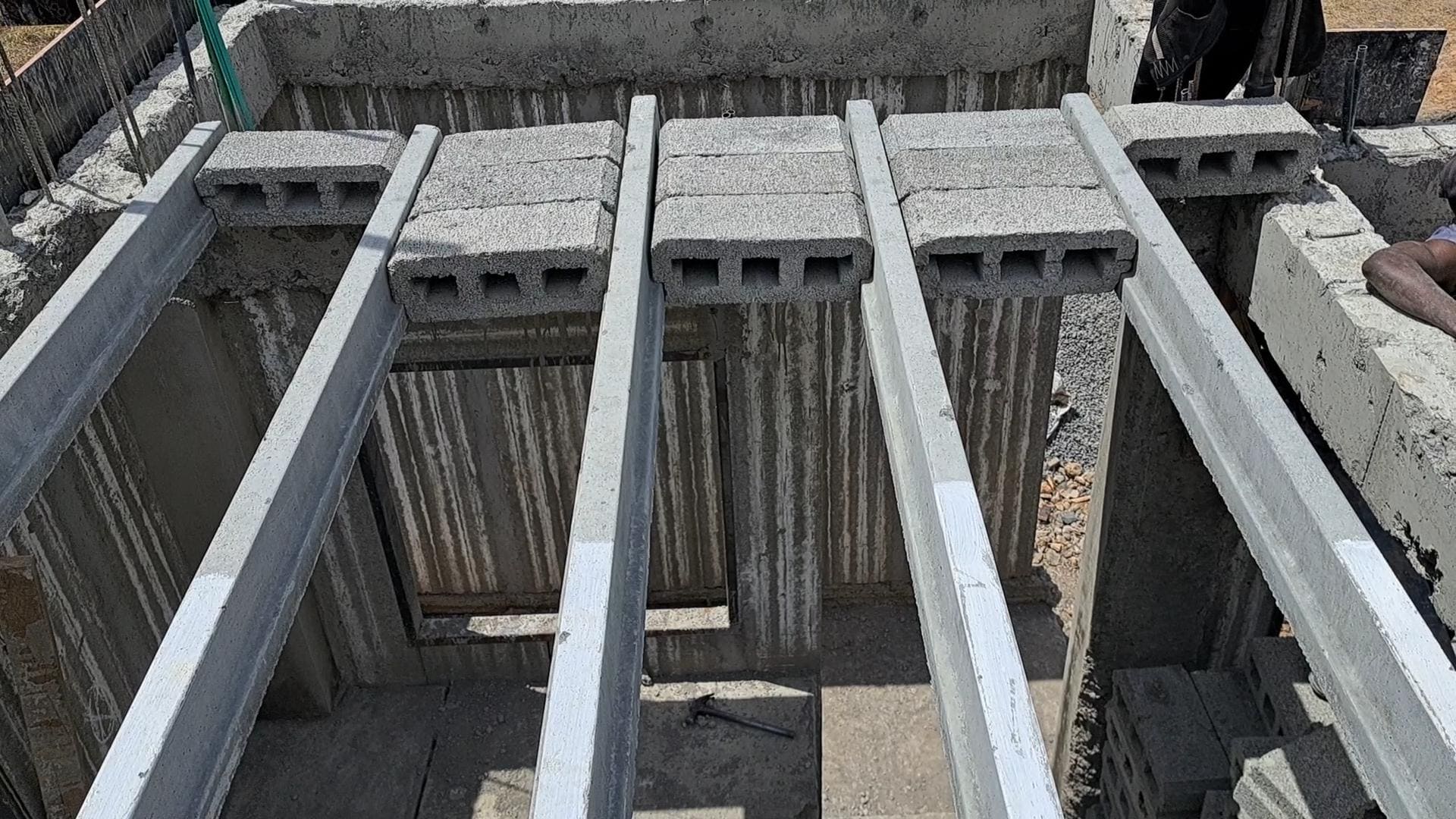
A beam & block slab (T-beams)
Over multiple floors, those savings can be meaningful.
At the same time, layout matters more than most people realize.
Poorly used space, like long corridors or awkward corners, still costs money to build but adds little value to the tenant.
Efficient layouts make your building more practical and more profitable.
Don’t Ignore the Everyday Experience
Tenants don’t just live in units, they experience the property daily.
Things like:
- Reliable water supply
- Proper drainage
- Consistent electricity
- Functional balconies
- Easy access and security
These are the details that influence satisfaction and retention.
A small feature like a balcony, for example, can significantly improve how a unit feels and functions in everyday life.
Plan for Maintenance From Day One
Rental property is not a one-time project.
It’s a system that runs every month, every year.
The materials you choose, the way systems are installed, and how services are laid out all affect long-term maintenance.
Some finishes look good initially but wear out quickly. Others hold up better over time.
Those early decisions either save you money or quietly cost you more later.
Think Long-Term, Even If You Start Small
When you step back, a rental project is more than just a building.
It’s a long-term system that needs to function consistently.
From construction to occupancy to maintenance.
You don’t have to get everything perfect from the beginning.
But taking time to think through these decisions carefully can significantly improve how your project performs.
If You Want to Go Deeper
Inside the Alternative Building Technologies Masterclass, I break down how to approach rental projects like thisstep by step.
From choosing the right construction systems…
to making smarter cost decisions…
to planning your build properly from the start.
The Alternative Building Technologies Masterclass
